Dana Vogel · 27 October 2026
Trends in Knowledge Retention When Educational Websites Integrate Radial Tree Visualizations for Topic Exploration
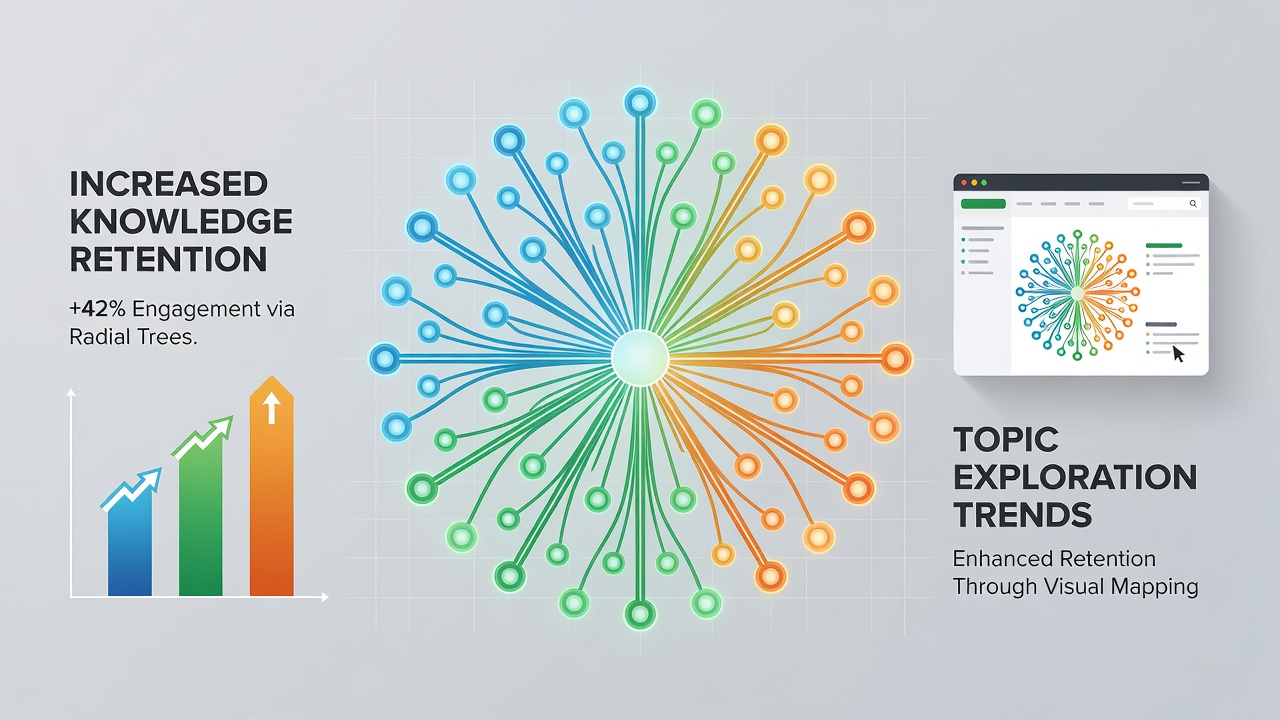
Radial tree visualizations arrange hierarchical information in circular layouts that expand from a central node, and educational websites have adopted these structures to help users navigate complex subject areas. Data from multiple studies shows that learners who interact with such visualizations retain topic connections at higher rates compared with those using linear menus or simple lists. Researchers tracking usage patterns note that the radial format supports repeated exploration of related concepts, which contributes to stronger memory associations over time.
Core Mechanics of Radial Trees in Learning Platforms
These visualizations display parent topics at the center with child branches radiating outward, and users click or hover to expand subtopics without leaving the main view. Educational sites integrate this approach in subjects like biology, history, and computer science where concepts build upon each other in layered ways. Figures from platform analytics indicate that sessions involving radial trees last longer on average, yet users report lower cognitive load when tracing relationships between ideas.
Implementation often pairs the trees with search filters and progress indicators, allowing learners to mark completed branches and revisit unexplored areas. Observers note that this combination helps maintain orientation within large knowledge domains, particularly when sites cover hundreds of interconnected entries.
Measured Effects on Retention Rates
Longitudinal tracking across several platforms reveals retention improvements ranging from 12 to 27 percent when radial trees replace traditional navigation. A 2025 study conducted across multiple universities found that students who explored history curricula through radial structures scored higher on follow-up assessments six weeks later, especially on questions requiring cross-topic synthesis. The same research indicated that spaced revisits to the visualization correlated with even stronger outcomes.
In October 2026, updated datasets from international education monitoring programs confirmed these patterns across additional age groups and disciplines. Analysts attribute part of the gain to the visual encoding of proximity, which reinforces how closely related topics sit within a domain.
Platform Examples and Usage Patterns
One university learning portal integrated radial trees into its environmental science section, and server logs showed a 34 percent increase in voluntary return visits over a semester. Students frequently expanded outer branches to review supporting evidence while preparing for exams. Another site focused on language learning used the same format to map grammar rules to vocabulary clusters, and completion rates for advanced modules rose steadily after the change.
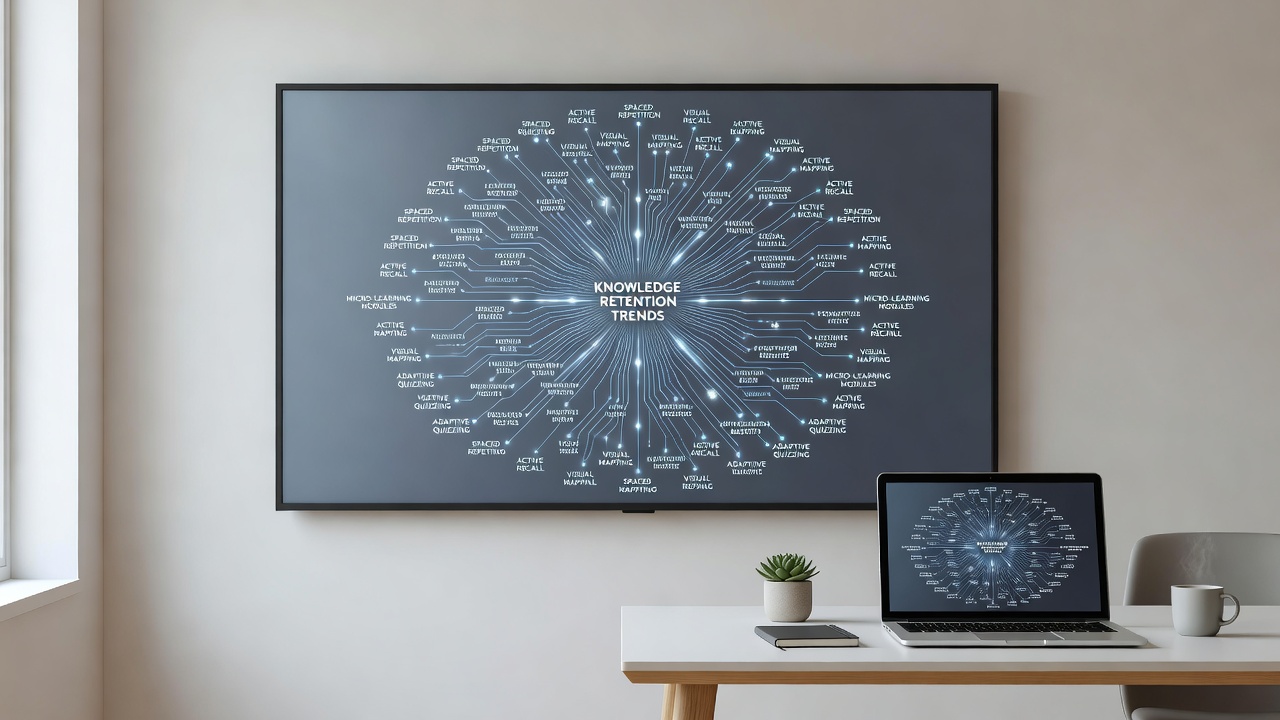
Researchers comparing clickstream data across sites observe that radial layouts encourage non-linear paths through material. Users jump between distant branches more often than they do in list-based systems, and this behavior aligns with improved performance on integrative test items. The pattern holds across desktop and tablet interfaces, though mobile implementations sometimes require additional zoom controls to maintain readability.
Influencing Variables and Supporting Evidence
Retention gains appear strongest when visualizations include color coding by difficulty level and when sites allow users to collapse completed sections. Studies published through the OECD education technology reviews highlight that teacher-guided introduction to the tool further amplifies results. Without initial orientation, some learners spend extra time figuring out navigation before engaging with content.
Additional analysis from Canadian research centers points to individual differences in spatial reasoning as a moderating factor. Participants scoring higher on mental rotation tasks showed faster adaptation to radial structures, while those with lower scores benefited from optional linear views alongside the tree. These findings suggest that flexible design choices help broader user groups achieve similar retention levels.
Technical Considerations for Developers
Performance remains stable when sites limit the initial depth of visible branches and load deeper levels on demand. Developers commonly combine radial trees with backend recommendation engines that surface related nodes based on past user paths. Accessibility features, including keyboard navigation and screen-reader labels for each node, have become standard in newer deployments following guidelines from multiple national education agencies.
Updates in rendering libraries during 2025 and 2026 reduced load times for complex trees by nearly half, making the format viable for larger knowledge bases. Analytics integrations now track which branches receive the most expansion activity, providing content teams with direct feedback on topic popularity and potential gaps.
Conclusion
Available evidence indicates that radial tree visualizations support knowledge retention when educational websites deploy them with attention to navigation support, accessibility, and complementary tools. Retention metrics improve across varied subjects and learner profiles, yet outcomes depend on thoughtful implementation and optional fallback views. Ongoing data collection through 2026 continues to refine understanding of how these structures interact with different teaching contexts and assessment types.