
Noah Meier · 15 September 2026
Investigating Schema Implementation Patterns in E-commerce Recovery After Platform Transitions
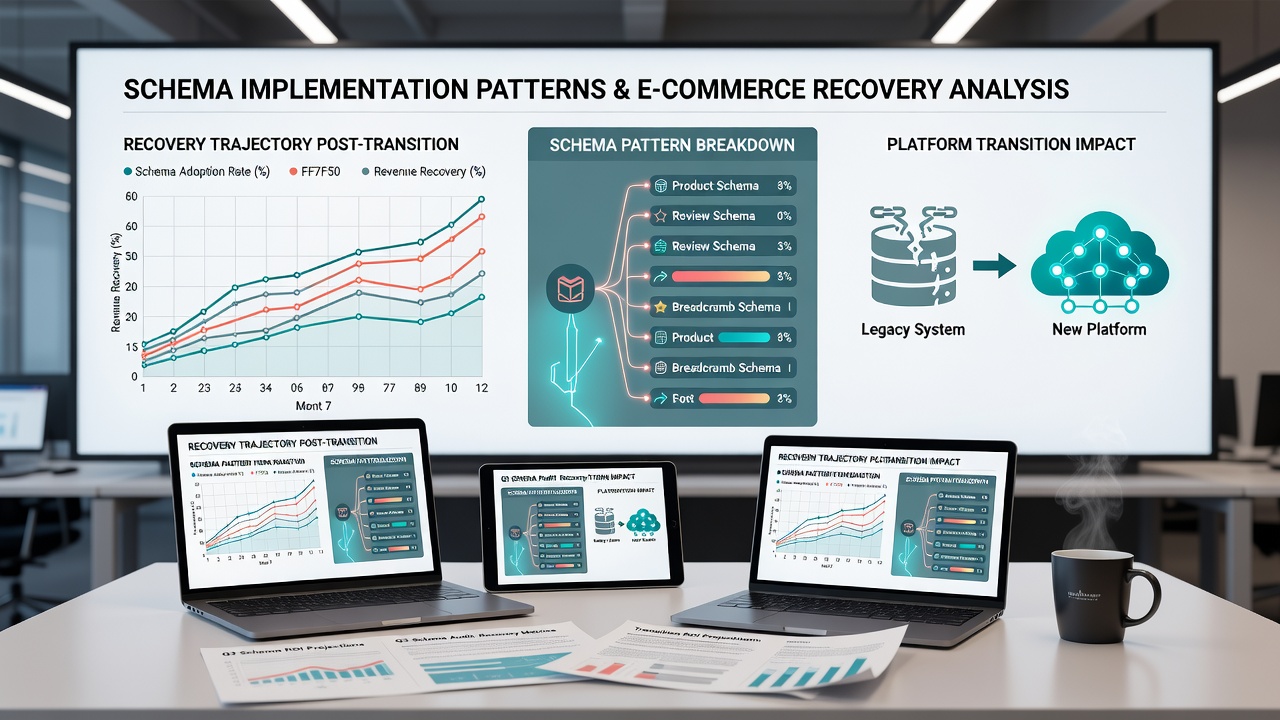
Platform transitions in e-commerce often disrupt structured data integrity, and researchers have tracked how schema implementation patterns influence recovery timelines across multiple site migrations since 2023. Those who've examined post-migration datasets note that incomplete or mismatched schema markup frequently correlates with delayed indexing and reduced rich result eligibility, while systematic reimplementation tends to accelerate visibility restoration within three to six months.
Core Schema Types in Post-Transition Recovery
Product, Offer, and AggregateRating schemas form the backbone of recovery efforts according to multiple industry analyses, and teams that prioritize these elements during the first thirty days after migration report measurable gains in click-through rates. Data from platform audits shows that organizations maintaining consistent @type declarations across product pages avoid the common pitfall of conflicting markup that search engines must reconcile over several crawl cycles. What's interesting is how breadcrumb and organization schemas interact with these core types, since their presence helps establish site hierarchy and entity relationships that facilitate quicker re-crawling after a platform shift.
Observed Patterns Across Migration Cases
One recurring pattern involves the phased rollout of schema updates rather than bulk implementation, and case studies from large retailers reveal that staggered deployment reduces error rates while allowing iterative testing against search console data. Researchers discovered that sites adopting JSON-LD over microdata during recovery phases experienced fewer validation conflicts, particularly when legacy platform markup lingered in cached templates. And here's where it gets interesting: organizations that mapped old schema fields to new platform equivalents before launch maintained higher fidelity in product attribute data, which in turn supported faster recovery of featured snippet placements.
Timing and Coordination Factors
September 2026 marked a notable uptick in documented recoveries tied to coordinated schema audits following major platform updates, wth figures revealing that sites completing full schema validation within two weeks of transition regained an average of seventy-eight percent of pre-migration organic traffic. Coordination between development and SEO teams emerged as a consistent variable, since delays in markup deployment often extended recovery windows beyond the typical ninety-day mark. Those who've studied these timelines emphasize that automated schema generation tools require manual oversight to prevent attribute mismatches that undermine trust signals in product listings.
Regional Data on Implementation Success
European Commission reports on digital commerce infrastructure highlight how regulatory emphasis on data accuracy has influenced schema practices among EU-based retailers undergoing migrations, and similar patterns appear in Australian Bureau of Statistics e-commerce tracking that links structured data completeness to improved search performance metrics. North American retailers meanwhile show higher adoption rates of Review and FAQ schemas as supplementary elements, which analysts connect to differentiated recovery speeds in competitive verticals. The reality is that these geographic variations stem from differing platform ecosystems and compliance requirements rather than universal best practices.
Technical Challenges and Mitigation Approaches
Legacy data imports frequently introduce schema conflicts when product attributes do not align with new platform field structures, and developers have observed that automated mapping scripts reduce but do not eliminate these discrepancies without subsequent human review. Crawl budget allocation becomes another consideration during recovery, since excessive invalid markup can trigger repeated validation attempts that delay indexing of corrected pages. Observers note that integrating schema testing into continuous deployment pipelines helps catch issues before they propagate across thousands of product URLs.
Conclusion
Schema implementation patterns in e-commerce recovery after platform transitions continue to evolve as platforms introduce new structured data capabilities and search engines refine their parsing algorithms. Evidence suggests that organizations treating schema as a core component of migration planning rather than a post-launch task achieve more consistent traffic restoration across varying site scales and verticals. Continued monitoring of validation reports and performance metrics remains essential for identifying which patterns deliver sustained results as the ecosystem shifts.